
Atlantic hurricane season begins June 1. Whether your business is on the coast or in Central Florida, now is a good time to take an honest look at your IT disaster recovery plan.
If you’re reading this from Michigan and feeling exempt, don’t. Replace “hurricane” with “ice storm,” “tornado,” or “week-long power outage,” and the same principles still apply. Business disruptions don’t care about geography.
This is the checklist we walk through for our Florida clients every year to prepare for the worst. It isn’t exhaustive, but if you can confidently answer these five questions, you’ve covered the vast majority of what actually causes problems when disaster strikes.
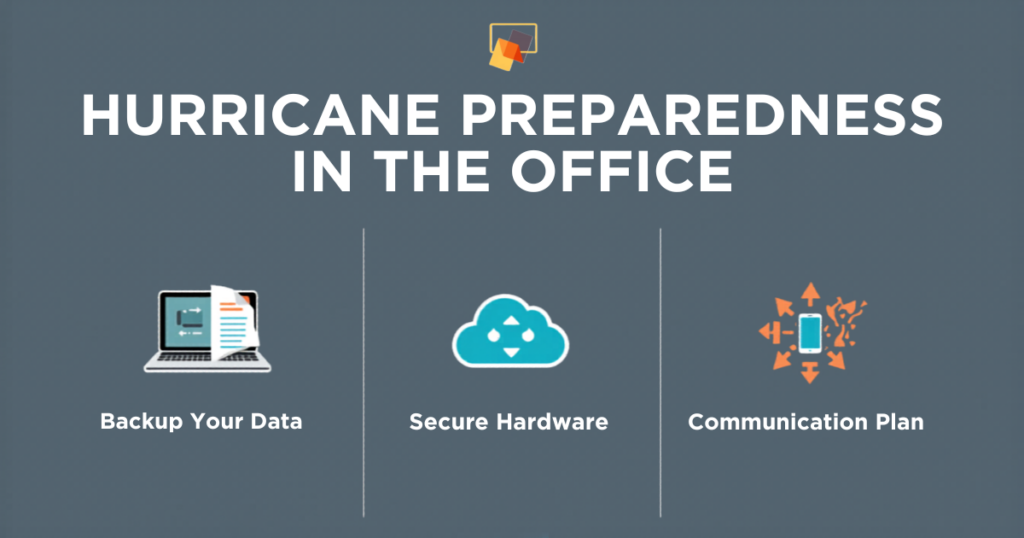
A 5-Step IT Disaster Recovery Plan Breakdown
Step 1: Confirm your backups exist outside of the building
If a hurricane takes out your office, anything stored in that office goes with it. That includes your file server, the backup device sitting next to it, and the spare backup drive in the same room.
Your test this week is simple: ask whoever manages your IT where your most recent backup physically lives.
If the answer is “on the NAS in the back room,” you have a problem.
The answer you want is some version of: “In the cloud, in a different geographic region.”
Step 2: Make sure people can work remotely
A storm may only last a day, but the disruption can linger much longer. Power outages, flooding, and internet outages can keep your team out of the office for days (maybe even weeks) afterward. If the office becomes inaccessible, can your team continue doing their jobs?
Not just checking email. Can they process invoices, answer customer calls, run payroll, access case files, or support customers?
If the answer requires someone driving to the office to retrieve files, you’ve identified a gap.
Cloud-based file storage, secure remote access, and modern collaboration tools can eliminate that dependency long before a storm arrives.
Step 3: Sort out your phone system before the power goes out
When the power goes out, traditional office phone systems stop working too.
That means customers may hear a busy signal, reach a disconnected line, or be unable to leave a message.
VoIP phone systems like Allworx keep working as long as someone has internet. Calls forward to mobile numbers, voicemails go to email, and the customer never knows the office is dark.
If you’ve been thinking about replacing an aging phone system, now would be a great time to inquire. A fully functional phone system before hurricane season can save your business a headache if a disaster hits.
Step 4: Document your recovery sequence
When it’s time to bring systems back online, the order matters.
Firewalls need to be powered on before the workstations. The server’s UPS battery needs to be checked before plugging it back in. Verify that the internet is stable before reconnecting the backup drive.
Write that process down now while everyone is calm. Print it twice — store one copy in the server room and keep another copy offsite with a trusted employee.
It’s better to have it written down for the day that you’ll need it.
Step 5: Decide who makes the call
Who decides when the office closes? Who tells employees to stay home? Who communicates with customers? Who coordinates with your IT provider during recovery?
Those decisions should have a clearly designated owner before an emergency occurs.
Make sure that person has important contact information readily available, including your IT provider, landlord, insurance carrier, key vendors, and critical customers.
Don’t store the only copy of those contacts on a server that may be offline.
IT Disaster Recovery Plan: A Few Thoughts
None of this is too complicated. Most of it can be addressed in a single afternoon. All of it is significantly less expensive than the downtime, lost productivity, and stress that come from discovering weaknesses during an actual emergency.
Many business owners who have lived through a major disruption have stories about the preparation they wish they had completed beforehand.
The goal of an IT disaster recovery plan isn’t to prevent every problem. It’s to make sure your business can continue operating when problems inevitably occur.
Need Help Implementing your IT Disaster Recovery Plan?
At NeverBlue IT, our goal is simple: make technology one less thing you have to worry about. That’s why disaster recovery planning is built into the way we support our clients.
Every year, we work with our Florida clients to prepare for hurricane season before a storm is on the radar. We verify that critical data is securely backed up, help protect equipment from potential flooding, and make sure employees can continue working if the office becomes inaccessible. Most importantly, when the storm passes, we’re ready to help get your systems back online and your business back to normal as quickly as possible.
We believe that’s part of the job. Your focus should be running your business, not worrying about backup systems, recovery procedures, or what happens when severe weather strikes.
If the five steps above feel like one more project you don’t have time for, we’d be happy to help take care of an IT disaster recovery plan for you.
Schedule a consultation, request a quote, or call us at 800-470-7001 to learn how we can help keep your business prepare this hurricane season.